
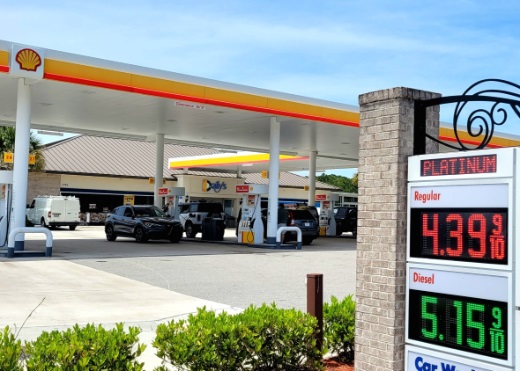
Photo by Alan Clanton, Thursday Review
Inflation Jumps in April;
But, Economy Grew
115,000 Jobs
| published May 14, 2026 |
By Thursday Review staff
The U.S. economy may be facing some of the worst buffeting it has endured in more than a decade, but a Labor Department report released this week shows that employers added at least 115,000 jobs in the month of April, greatly exceeding expectations amidst worries about higher gas prices and rising food costs.
The report showed also that the unemployment rate is hovering at 4.3%, a modest level according to most economists. The White House touted the figures as evidence that there is in fact good news despite the intense challenges. The sectors showing the most robust growth in new jobs include healthcare and medical fields—which alone accounted for 32,000 jobs—and transportation, logistics, and warehousing, which created 30,000 new positions. Despite some fears of recession, retail companies created about 22,000 new jobs, though some analysts suggest that the growth in retail positions could just as easily melt away quickly if gas prices continue to rise.
The war with Iran has stalled most Persian Gulf shipping, trapped hundreds of oil tankers northwest of the Strait of Hormuz, and sent oil and gas prices upward worldwide, with gas-at-the-pump for Americans topping $4.50 earlier in the week. Rising oil prices have begun to ripple into other areas, including shipping and over-the-road transit, and many grocery prices, as retailers struggle with costs being passed along from farmers, growers and meat producers who themselves are being pummeled by the high cost of oil.
Labor Department data also showed that hourly wages rose very slightly over the past twelve months to $37.41 per hour, a new high, though economists and business analysts note that even at that rate, most Americans are struggling mightily to make ends meet.
Most economists had offered forecasts of April jobs gains of 60-to-67 thousand new jobs, meaning the economy nearly doubled that prediction, and that silver lining may nudge the Federal Reserve to stay the course on interest rates, at least for the short term.
In the meantime, worries over the cost of gas-at-the-pump, rising jet fuel costs, and the challenges facing many U.S. farmers still dominate the mood of U.S. consumers. Instability in oil supplies and uncertainty about the war in Iran have wrought somewhat disappointing news for the two biggest U.S. oil and energy conglomerates—Exxon-Mobil and Chevron—each of which posted lower-than-expected profits for the first quarter of this year. In the quarterly reports, however, both company’s CEOs insisted that once oil begins to flow through the Strait of Hormuz, conditions will likely return to normalcy.
In a separate report, the U.S. Bureau of Labor Statistics reported that inflation in the U.S. jumped to 3.8% in April—a spike driven largely by oil prices, and the collateral damage those increases have wrought on groceries, household supplies, shipping and transit, storage, and farmers. April’s increase in costs was somewhat higher than March, and substantially higher than February when prices rose by only 2.4%. From the period of mid-2023 until this year, U.S. prices have remained relatively stable.
Related Thursday Review articles:
Pain at the Pump Equals Pain at the Grocery Store; Thursday Review staff; Thursday Review; April 12, 2026.
Who is to Blame for the Spirit Airline Debacle?; By Thursday Review staff, Thursday Review; May 2, 2026.